Three-Phase STS Static Transfer Switch | 380V Dual-Power Seamless Transfer Equipment for Telecom Server Rooms
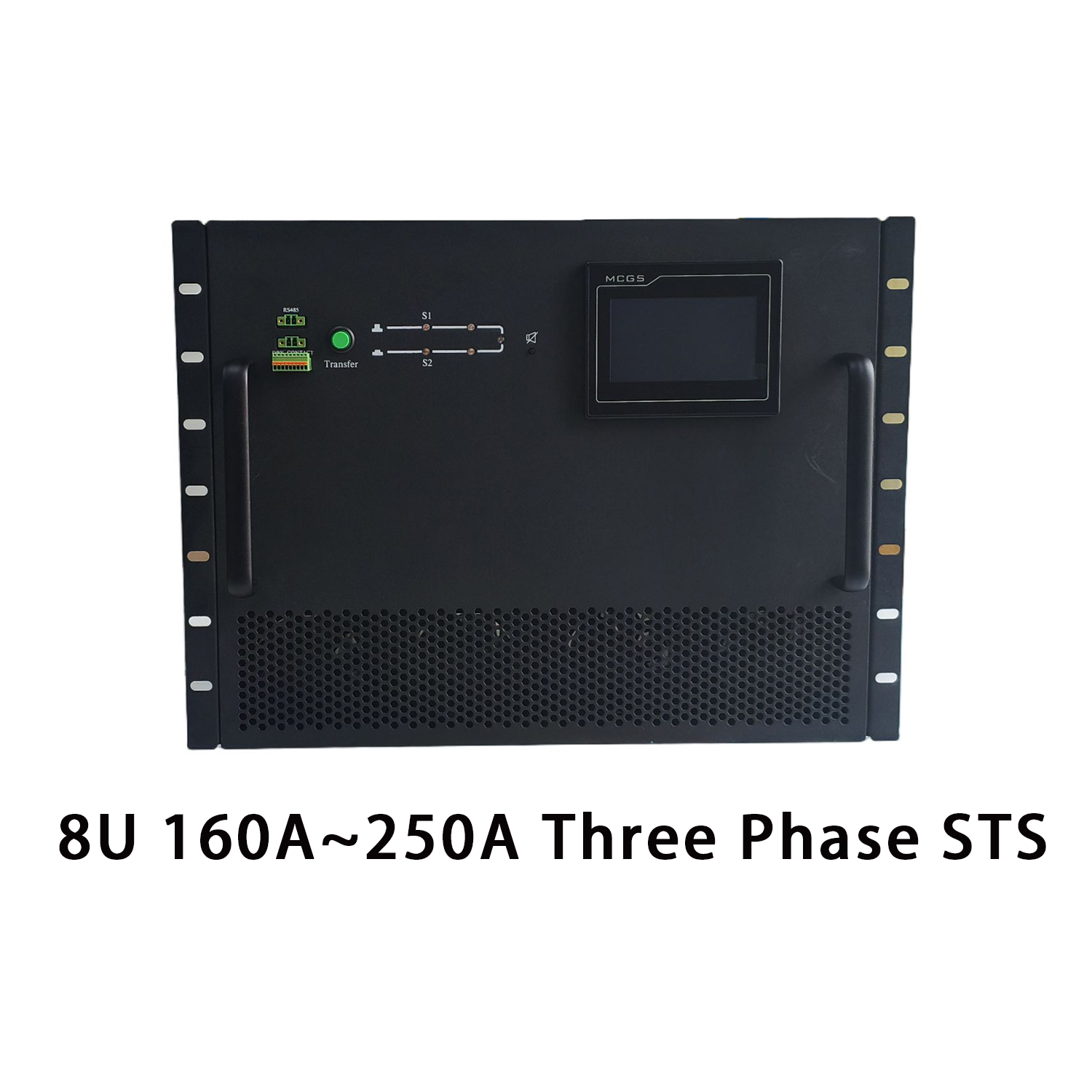
In high-end environments such as large-scale telecommunications hub facilities, 5G core networks, supercomputing data centers, and electric power communication systems, core equipment typically utilizes a three-phase 380V AC power architecture. Issues such as single-source failures, voltage fluctuations, or momentary mains interruptions can lead to critical consequences, including total system shutdowns, network paralysis, and data loss. The three-phase Static Transfer Switch (STS) is a solid-state, dual-source switching device specifically engineered for high-power, three-phase loads. Unlike standard single-phase STSs or traditional mechanical Automatic Transfer Switches (ATS), it employs high-speed thyristor-based electronic switching technology to achieve seamless, millisecond-level switching between two three-phase power sources. Serving as a critical component in redundancy systems for high-power, precision telecommunications equipment, it ensures a continuous, zero-interruption power supply around the clock.

Core Product Functions
The three-phase STS (Static Transfer Switch) is deeply optimized for three-phase four-wire and three-phase five-wire power supply systems, focusing on the continuity and safety of power delivery for high-power telecommunications loads; its core capabilities span four key dimensions: intelligent switching, power monitoring, safety protection, and intelligent operations and maintenance.
1. Seamless automatic switching between dual three-phase power sources: Supports input from any combination of two independent three-phase mains supplies, UPS units, voltage stabilizers, or generators, with the primary source designated as the default. The device continuously monitors the voltage, frequency, phase, and phase-loss status of both power sources in real time. In the event of faults such as undervoltage, overvoltage, power loss, or phase anomalies on the primary line, it rapidly switches to the backup power source and automatically reverts to the primary source once power is restored—all without manual intervention—making it ideal for unmanned equipment rooms.
2. Millisecond-level ultra-fast switching with zero-load interruption: Utilizing a contactless semiconductor SCR (Silicon Controlled Rectifier) switching architecture, this system eliminates the latency issues inherent in mechanical designs. The total switching time is ≤8 ms—well below the critical power-loss response thresholds for servers, core switches, and telecommunications transmission equipment. The switching process is seamless, free from voltage dips and current surges, thereby completely preventing issues such as system reboots, connection drops, and data corruption in high-power three-phase telecommunications equipment.
3. Comprehensive Three-Phase Power Fault Monitoring and Protection: Tailored to the characteristics of three-phase power supplies, this system independently monitors the operating status of phases A, B, and C as well as the neutral line. It accurately detects common three-phase power faults—such as single-phase power loss, three-phase imbalance, phase loss, incorrect phase sequence, frequency deviation, and surge overvoltage—and precisely triggers switching or protective actions. This eliminates the monitoring blind spots associated with traditional transfer switches, providing all-around protection for high-power downstream communication loads.
4. Flexible switching between manual and automatic modes: Supports both fully automatic intelligent operation and manual override modes. Power circuits can be manually switched during routine O&M, equipment servicing, and circuit testing—facilitating equipment commissioning and troubleshooting while balancing the stability of automation with the flexibility of manual operations. Additionally, a dedicated maintenance interlock function prevents accidental live-circuit operations during maintenance, ensuring safety.
5. Intelligent Remote Monitoring and Data Traceability: Equipped with industrial-grade intelligent control chips and high-definition display panels, the system provides real-time monitoring of key parameters—including dual-channel three-phase voltage, current, load rate, phase status, and equipment temperature. Standard RS485 and network communication interfaces enable integration with data center environmental monitoring systems and cloud management platforms, facilitating remote status inquiries, fault alerts, and operational data logging, thereby supporting intelligent O&M frameworks for communication equipment rooms.
Key Product Features
Compared to standard single-phase STS units or mechanical ATS dual-power switches, the three-phase STS designed specifically for the telecommunications industry is optimized for rigorous operating conditions, offering core advantages such as high stability, high power capacity, strong interference immunity, and a long service life.
1. Industrial-grade three-phase compatibility and high-power load support: Features a standard AC 380V/400V three-phase input/output design compatible with three-phase four-wire and three-phase five-wire power systems. With current ratings ranging from 32A to 250A, it meets the power requirements of high-power loads—such as precision air conditioning in large telecom equipment rooms, high-capacity UPS systems, core server clusters, and primary telecommunications transmission equipment—making it suitable for power supply scenarios in large and medium-sized telecommunications hubs.
2. Contactless operation, zero wear, and ultra-long service life: Utilizing electronic semiconductor switching throughout, the system eliminates mechanical contacts, arcing, and issues such as sticking or oxidation. This fundamentally resolves the pain points associated with traditional ATS switches—namely, damage from frequent switching, contact degradation, and high failure rates. The device operates silently and without energy loss, boasting a mean time between failures (MTBF) exceeding 150,000 hours, making it ideally suited for the continuous, round-the-clock operation required by telecommunications equipment.
3. Synchronous/Asynchronous Adaptive Switching Technology: Supports adaptive switching between dual power sources (whether in-phase or out-of-phase) and features intelligent phase synchronization detection and calibration. The switching process entails no inrush current or voltage distortion, ensuring no damage to downstream precision communication chips or power modules, and is compatible with various brands and types of primary and backup power source combinations.
4. Comprehensive, multi-layered safety protection: Integrates all-around protection mechanisms—including safeguards against three-phase overload, short circuits, phase loss, incorrect phase sequence, over-temperature, over-current, and lightning surges—with automatic lockout protection upon fault detection to prevent fault propagation and damage to the entire power supply system. Additionally, the control logic for the neutral line (connecting before disconnecting) has been optimized to eliminate the risk of high-voltage breakdown caused by a neutral line break in three-phase systems, significantly enhancing power supply safety.
5. Robust Electromagnetic Compatibility (EMC) for Complex Server Room Environments: Certified to high EMC standards, the unit effectively withstands high-frequency electromagnetic interference generated by high-density equipment in communication server rooms. It emits no spurious radiation, ensuring no disruption to surrounding communication signal transmission or equipment data exchange, making it perfectly suited for the complex environments of server rooms where multiple devices operate in close proximity.
6. Standardized rack design for easy installation: Features a standard 19-inch rack-mount structure compatible with universal communication cabinets; the compact design and organized cabling save server room space, meeting the requirements for standardized and modular facility construction.
Key application scenarios
Designed specifically for high-power, high-reliability, and zero-downtime three-phase applications in the telecommunications and related sectors, the system is primarily suited for the following scenarios:
1. Telecom operator 5G core equipment rooms, provincial communication hubs, and backbone transmission facilities;
2. Power supply systems for large-scale cloud computing data centers and server clusters in IDC facilities;
3. Automated power supply systems for dedicated communication facilities in sectors such as electric power, rail transit, and broadcasting;
4. Critical power supply environments, including core network facilities for high-end government and enterprise clients, as well as financial communication data centers.
Core Product Value
Serving as the "secure switching hub" for high-power telecommunications power supply systems, the three-phase STS (Static Transfer Switch) effectively addresses industry pain points such as switching delays, contact failures, and power fluctuations associated with dual-source systems. With core advantages including seamless millisecond-level switching, zero-wear operation, and intelligent monitoring and maintenance, it fundamentally eliminates risks—such as network outages, service paralysis, and data loss—caused by power failures. By significantly reducing O&M costs and losses due to malfunctions, it stands as an essential core component of redundant power architectures in modern, large-scale telecommunications facilities.

 language
 English
 Nederlands
 Français
 Русский язык
 Polski
 日本語
 ภาษาไทย
 Deutsch
 Português
 español
 Italiano
 한어
 Gaeilge
 dansk
 Tiếng Việt
 Pilipino
 Ελληνικά
 ᐃᓄᒃᑎᑐᑦ
 Norge
 नेपालीName
 فارسی
 हिंदी
 ગુજરાતી
 Slovenská
 היברית
 Magyar
 بالعربية
 বাংলা
 IndonesiaName
 Malti
 català
 latviešu
 УкраїнськаName
 ກະຣຸນາ
 Română
 Svenska
 հայերեն
 ဗာရမ်
 Türkçe
 български
 Malay
 मराठीName
 മലമാലം
 slovenščina
 አማርኛ
 albanian
 Hrvatski
 Suid-Afrikaanse Dutch taal


.jpg)


 Hot News
